
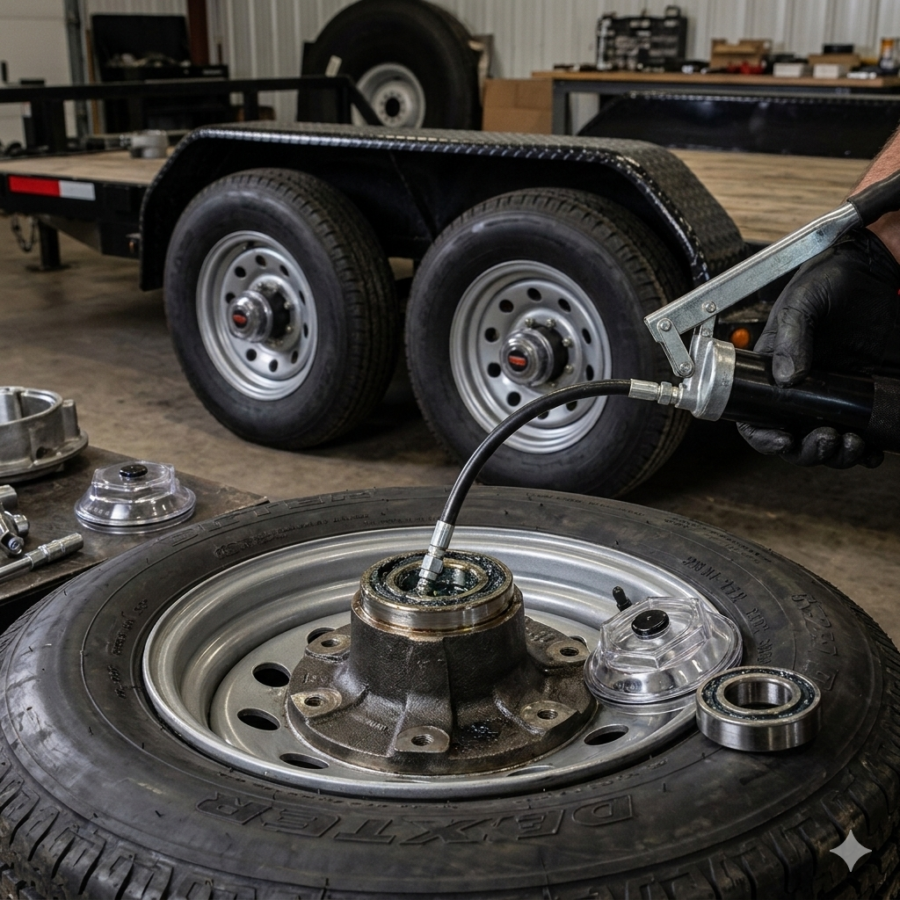
Proper trailer maintenance is essential for businesses that rely on transportation equipment for logistics, construction, or equipment hauling. One of the most important maintenance tasks is keeping wheel bearings properly lubricated. When bearings are neglected, friction increases, leading to overheating, premature wear, and even dangerous wheel failures.
This is where components like the dexter axle hub cap play an important role. A high-quality hub cap helps protect the wheel hub, retain lubrication, and maintain the performance of the axle assembly. Combined with regular maintenance, it ensures that trailer bearings operate smoothly for thousands of miles.
In this guide, we’ll explain how to lubricate mounted bearings, how often trailer bearings should be greased, and how to properly maintain Dexter EZ Lube axle systems.
A How-to Guide to Lubricate a Mounted Bearing
Lubricating mounted trailer bearings is a critical maintenance step that ensures smooth rotation and prevents overheating. Bearings allow the wheel hub to rotate freely around the axle, and without proper lubrication they can quickly fail under heavy loads.
A dexter axle hub cap helps protect the hub assembly by sealing the bearings from dust, water, and debris while keeping grease inside the system.
Tools and Materials You’ll Need
Before starting, gather the following items:
- High-quality wheel bearing grease
- Grease gun
- Clean shop towels or rags
- Safety gloves
- Replacement hub cap (if needed)
High-quality hub caps designed specifically for Dexter axles can be found through suppliers offering Dexter axle hub cap options for trailer hubs, which are designed to provide proper sealing and durability.
Step-by-Step Lubrication Process
Follow these steps to lubricate mounted trailer bearings effectively:
- Secure the Trailer
Park on a flat surface and ensure the trailer cannot move. Use wheel chocks for safety. - Access the Hub Assembly
Remove the existing hub cap carefully to expose the spindle and bearing area. - Inspect the Bearings
Check for signs of wear, rust, or contamination. If damage is visible, replacement may be required. - Apply Grease
Using a grease gun, slowly add grease to the bearing system. Ensure the grease flows evenly through the hub. - Reinstall the Hub Cap
Replace the hub cap securely to seal the assembly and prevent contamination.
Routine lubrication ensures bearings remain protected even during long-haul transport or heavy cargo operations.
Guide to Know How Often to Grease Trailer Bearings
One of the most common questions fleet operators ask is how frequently trailer bearings should be lubricated. The answer depends on usage, environment, and load conditions.
General Maintenance Recommendations
For most trailers, bearings should be greased:
- Every 10,000–12,000 miles for frequently used trailers
- Once a year for recreational or light-use trailers
- More often for trailers operating in harsh conditions
Industries such as construction or agriculture may require more frequent lubrication due to dirt, moisture, and heavy loads.
Factors That Affect Lubrication Frequency
Several conditions can influence how often maintenance is needed:
Load Weight
Heavier loads place more stress on bearings, requiring more frequent lubrication.
Driving Environment
Trailers operating in environments such as:
- Dusty construction sites
- Coastal areas with salt exposure
- Wet or muddy conditions
may require additional maintenance.
Travel Distance
Long-distance hauling generates more heat in wheel bearings, increasing lubrication requirements.
Warning Signs Your Bearings Need Attention
Fleet managers should watch for early warning indicators such as:
- Excessive wheel heat
- Grinding or unusual noises
- Grease leakage around the hub
- Visible metal shavings
If any of these symptoms appear, immediate inspection is recommended.
Maintaining proper lubrication schedules helps prevent expensive downtime and extends the life of trailer components.
How to Lubricate Dexter EZ Lube Axles
Dexter EZ Lube axles are designed to simplify the lubrication process. Instead of removing the hub assembly each time, these axles feature a grease fitting that allows grease to be injected directly into the spindle.
This system distributes grease through the bearings while pushing old grease out of the hub.
A helpful technical overview of this system can be found in this guide explaining how to lubricate Dexter EZ Lube axles, which details the process and maintenance considerations.
Step-by-Step EZ Lube Process
To lubricate Dexter EZ Lube axles properly:
- Lift the Wheel Off the Ground
This allows the wheel to rotate freely while grease is applied. - Remove the Hub Cap
Take off the dexter axle hub cap to access the grease fitting. - Attach the Grease Gun
Connect the grease gun to the EZ Lube zerk fitting. - Slowly Pump Grease
Rotate the wheel slowly while pumping grease into the system. - Watch for Old Grease Exit
Continue pumping until fresh grease pushes old grease out. - Replace the Hub Cap
Install the hub cap securely to maintain a clean and sealed hub.
Benefits of the EZ Lube System
Many fleet operators prefer Dexter EZ Lube axles because they provide:
- Faster maintenance procedures
- Reduced need for full hub disassembly
- Better grease distribution
- Lower labor costs
When paired with a reliable dexter axle hub cap, the system provides excellent protection against contaminants that could damage the bearings.
Conclusion
Proper trailer bearing maintenance is essential for safe and efficient transportation operations. Bearings experience significant stress during hauling, and without proper lubrication they can fail quickly—leading to costly repairs and operational downtime.
Using high-quality components such as a dexter axle hub cap helps protect the hub assembly while ensuring grease remains properly sealed within the system. Combined with regular lubrication and inspection, this simple component plays a key role in extending the life of trailer axles.
Businesses that operate fleets, equipment trailers, or transport vehicles should establish a clear maintenance schedule, monitor bearing performance, and ensure proper lubrication techniques are followed. By doing so, organizations can improve safety, reduce maintenance costs, and keep trailers operating reliably for years to come.