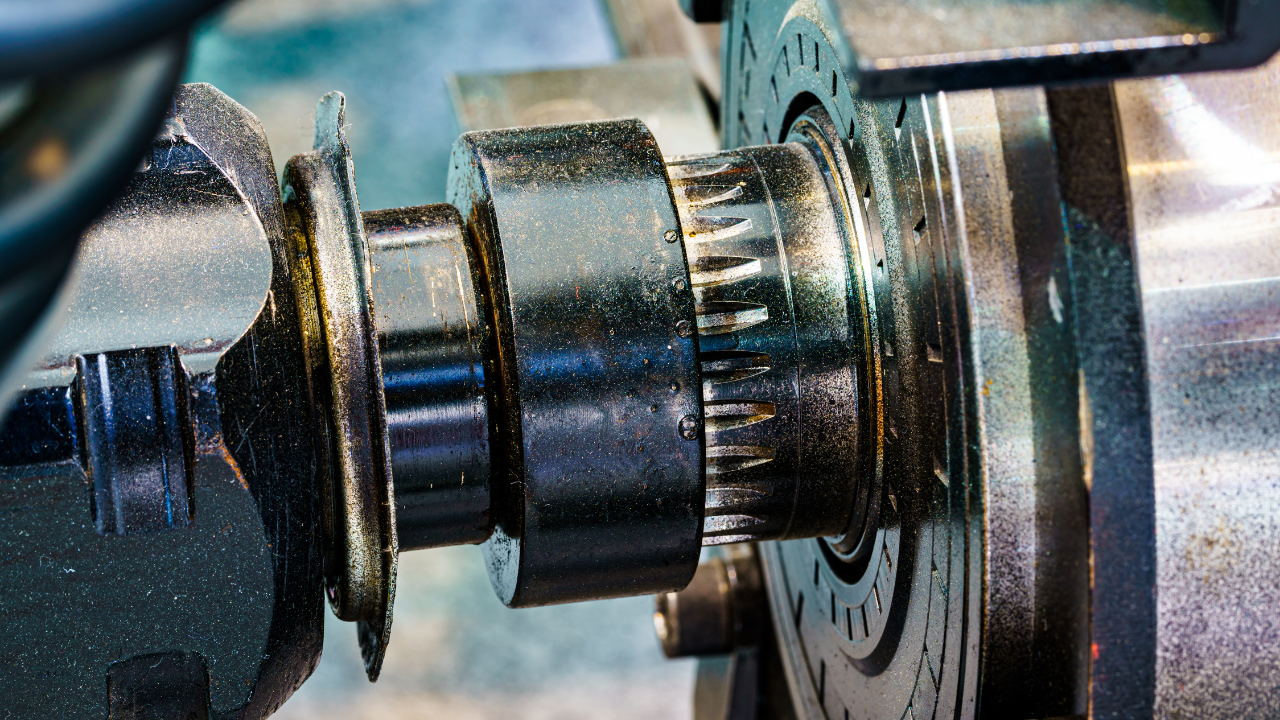
Dexter Axle Hub Cap Maintenance Guide: How to Lubricate Trailer Bearings Properly
Proper trailer maintenance is essential for businesses that rely on transportation equipment for logistics, construction, or equipment hauling. One of the most important maintenance tasks is keeping wheel bearings properly lubricated. When bearings are neglected, friction increases, leading to overheating, premature wear, and even dangerous wheel failures.

This is where components like the dexter axle hub cap play an important role. A high-quality hub cap helps protect the wheel hub, retain lubrication, and maintain the performance of the axle assembly. Combined with regular maintenance, it ensures that trailer bearings operate smoothly for thousands of miles.

In this guide, we’ll explain how to lubricate mounted bearings, how often trailer bearings should be greased, and how to properly maintain Dexter EZ Lube axle systems.

A How-to Guide to Lubricate a Mounted Bearing

Lubricating mounted trailer bearings is a critical maintenance step that ensures smooth rotation and prevents overheating. Bearings allow the wheel hub to rotate freely around the axle, and without proper lubrication they can quickly fail under heavy loads.

A dexter axle hub cap helps protect the hub assembly by sealing the bearings from dust, water, and debris while keeping grease inside the system.

Tools and Materials You’ll Need

Before starting, gather the following items:

  • High-quality wheel bearing grease
  • Grease gun
  • Clean shop towels or rags
  • Safety gloves
  • Replacement hub cap (if needed)

High-quality hub caps designed specifically for Dexter axles can be found through suppliers offering Dexter axle hub cap options for trailer hubs, which are designed to provide proper sealing and durability.

Step-by-Step Lubrication Process

Follow these steps to lubricate mounted trailer bearings effectively:

  1. Secure the Trailer
    Park on a flat surface and ensure the trailer cannot move. Use wheel chocks for safety.
  2. Access the Hub Assembly
    Remove the existing hub cap carefully to expose the spindle and bearing area.
  3. Inspect the Bearings
    Check for signs of wear, rust, or contamination. If damage is visible, replacement may be required.
  4. Apply Grease
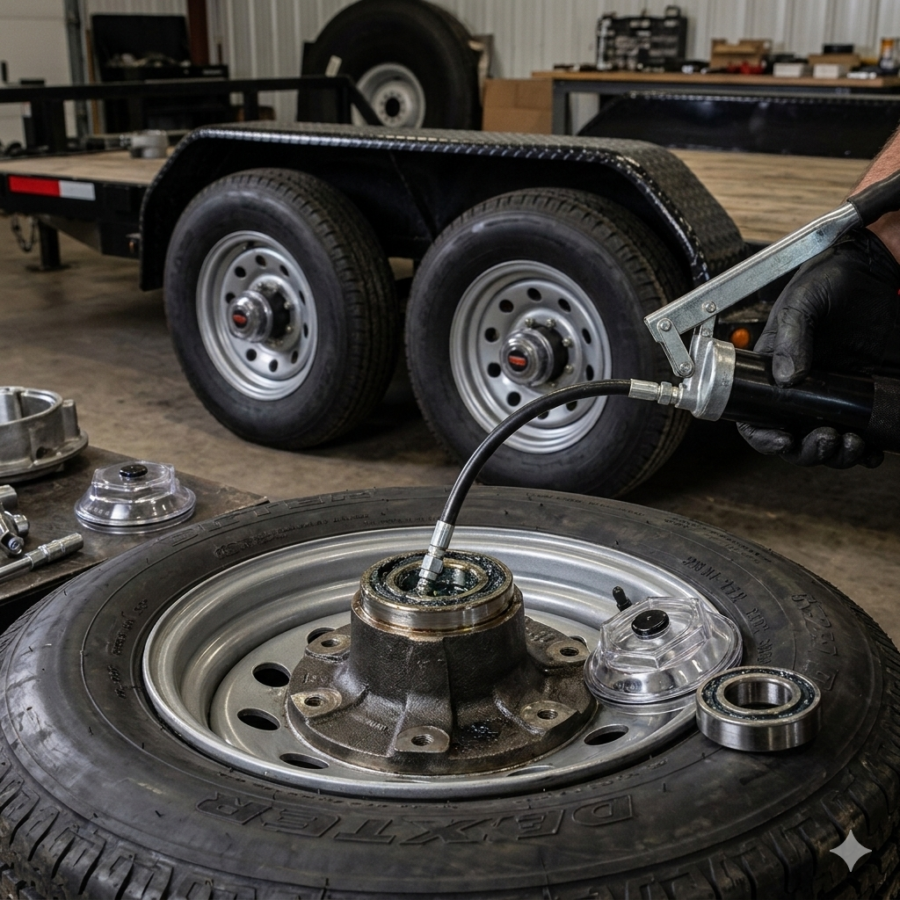
    Using a grease gun, slowly add grease to the bearing system. Ensure the grease flows evenly through the hub.
  5. Reinstall the Hub Cap
    Replace the hub cap securely to seal the assembly and prevent contamination.

Routine lubrication ensures bearings remain protected even during long-haul transport or heavy cargo operations.

Guide to Know How Often to Grease Trailer Bearings

One of the most common questions fleet operators ask is how frequently trailer bearings should be lubricated. The answer depends on usage, environment, and load conditions.

General Maintenance Recommendations

For most trailers, bearings should be greased:

  • Every 10,000–12,000 miles for frequently used trailers
  • Once a year for recreational or light-use trailers
  • More often for trailers operating in harsh conditions

Industries such as construction or agriculture may require more frequent lubrication due to dirt, moisture, and heavy loads.

Factors That Affect Lubrication Frequency

Several conditions can influence how often maintenance is needed:

Load Weight
Heavier loads place more stress on bearings, requiring more frequent lubrication.

Driving Environment

Trailers operating in environments such as:

  • Dusty construction sites
  • Coastal areas with salt exposure
  • Wet or muddy conditions

may require additional maintenance.

Travel Distance

Long-distance hauling generates more heat in wheel bearings, increasing lubrication requirements.

Warning Signs Your Bearings Need Attention

Fleet managers should watch for early warning indicators such as:

  • Excessive wheel heat
  • Grinding or unusual noises
  • Grease leakage around the hub
  • Visible metal shavings

If any of these symptoms appear, immediate inspection is recommended.

Maintaining proper lubrication schedules helps prevent expensive downtime and extends the life of trailer components.

How to Lubricate Dexter EZ Lube Axles

Dexter EZ Lube axles are designed to simplify the lubrication process. Instead of removing the hub assembly each time, these axles feature a grease fitting that allows grease to be injected directly into the spindle.

This system distributes grease through the bearings while pushing old grease out of the hub.

A helpful technical overview of this system can be found in this guide explaining how to lubricate Dexter EZ Lube axles, which details the process and maintenance considerations.

Step-by-Step EZ Lube Process

To lubricate Dexter EZ Lube axles properly:

  • Lift the Wheel Off the Ground
    This allows the wheel to rotate freely while grease is applied.
  • Remove the Hub Cap
    Take off the dexter axle hub cap to access the grease fitting.
  • Attach the Grease Gun
    Connect the grease gun to the EZ Lube zerk fitting.
  • Slowly Pump Grease
    Rotate the wheel slowly while pumping grease into the system.
  • Watch for Old Grease Exit
    Continue pumping until fresh grease pushes old grease out.
  • Replace the Hub Cap
    Install the hub cap securely to maintain a clean and sealed hub.

Benefits of the EZ Lube System

Many fleet operators prefer Dexter EZ Lube axles because they provide:

  • Faster maintenance procedures
  • Reduced need for full hub disassembly
  • Better grease distribution
  • Lower labor costs

When paired with a reliable dexter axle hub cap, the system provides excellent protection against contaminants that could damage the bearings.

Conclusion

Proper trailer bearing maintenance is essential for safe and efficient transportation operations. Bearings experience significant stress during hauling, and without proper lubrication they can fail quickly—leading to costly repairs and operational downtime.

Using high-quality components such as a dexter axle hub cap helps protect the hub assembly while ensuring grease remains properly sealed within the system. Combined with regular lubrication and inspection, this simple component plays a key role in extending the life of trailer axles.

Businesses that operate fleets, equipment trailers, or …
Few Reasons to Immediately Replace Missing Oil Caps

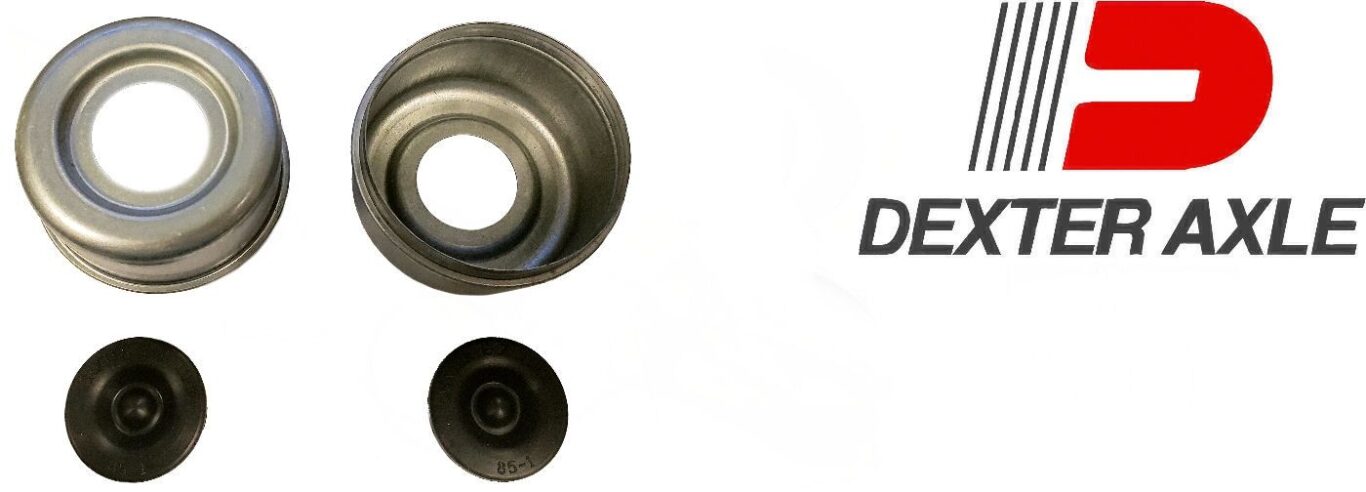
From a Dexter axle hub cap to an oil cap, there are so many components that get overlooked. It’s easily done and a lot of the time, you wouldn’t know they existed. Unfortunately, there are some parts of an engine that should never be overlooked or neglected. Oil caps are one such item. Investing in a new oil cap can be incredibly smart and necessary because the repercussions can be expensive (not to mention risky). So, here are a few good reasons to replace your missing oil cap immediately.

A Fire Can Happen

A lot of people think a missing oil cap isn’t a big such a big deal and that there’s no need to purchase a replacement. Some drivers actually stuff a rag or tape into the place the oil cap should be. It’s not as silly as it seems, however. This is something hundreds do across the country every day. Unfortunately, this can cause a fire. It’s a very real possibility and can happen, so don’t take the risk. It’s one of the biggest and simplest reasons to replace a missing oil cap.

Letting Debris Infiltrate Your Oil

A missing oil cap is a major headache waiting to happen because it exposes the oil to debris. For example, you drive the vehicle without the oil cap which allows dust and water vapour to seep into the oil. These things might seem harmless but can cause serious engine damage. It typically results in you having to replace or repair the engine which isn’t necessary if you buy a new oil cap. Like a Dexter axle hub cap, a replacement oil cap can keep the vehicle running smoothly.

Repairs are More Likely to be Necessary

Engines are delicate machines that need constant care and attention, and a simple missing oil cap can spell disaster. For instance, a vacuum leak can occur because of the missing oil cap which can kill an engine. Repairing or replacing the engine (depending on the severity) can be incredibly costly and not something that most can afford. That is why you should replace any missing components on your vehicle, especially an oil cap.

Buy a Quality Cap to Ensure Longevity

Oil caps are not major components of a machine and yet they play a crucial part in its existence. Remove the oil cap and your entire engine is at risk. It boggles the mind but highlights the importance of proper care and routine maintenance. You should always inspect the vehicle once a month to ensure everything’s in good order. As soon as you notice a missing oil cap, replace it with a new but high-quality one. It makes a difference to your engine.

Keep Your Engine in Good Order

In conclusion, when it comes to enclosed trailer accessories, the importance of components like oil caps cannot be overstated. A missing oil cap might appear insignificant, but its absence can lead to serious consequences such as fire hazards, engine damage, and costly repairs. Therefore, promptly investing in a replacement oil cap of high quality is imperative to safeguard your vehicle’s health and longevity. Just as you would prioritize replacing a missing Dexter axle hub cap, ensuring the presence of a replacement oil cap is crucial for maintaining optimal engine performance and preventing potential hazards and expenses in the future.…

What distinguishes wheel covers and hubcaps from one another?

Most car owners don’t pay much attention to the components that go inside on, or around their vehicles. While most of the parts have unique technical names; individuals frequently generalize them, which can lead to confusion – as with wheel covers and hubcaps; especially dexter axle hub cap. Most car owners mistakenly believe they are identical, but they are truly distinct.

The Hubcap

The real purpose of a hubcap is to protect the wheel hub part of your car. This is where the lug nuts attach or screw on and the wheel is mounted to the hub. In most cases, hub caps don’t completely enclose the wheel. They essentially cover this central hub area and can have a diameter ranging from 2 to 10 inches, mainly dependent on the size of the wheel.

Dexter axle hub caps are made to snap into place on the wheel or hub region and attach quickly. This type of system has been around since the dawn of vehicles in order to provide easy access to the lug nuts that hold the wheel in place. Although some hub cap systems did use extra plastic lugs that could thread onto the bolts and fit over them, the threads of the plastic readily wear out and cross-thread.

When the threads strip the grip is lost which causes the hub cup to jump off the wheel. The most common kind currently sold in stores holds the hub cap flush to the hub using a snap or circular wire, tension, and clips. The hubcap is prevented from flying off by this force fit.

Vehicle Wheel Covers

This is where the confusion rests with a lot of people, as the wheel cover is very different from the hub cup. The wheel cover truly reaches out and covers the full wheel, unlike the hubcap which merely covers a section of the wheel.

A lot of modern vehicles will invest in quality wheel systems, such as pickup trucks that use mag-alloy wheels that are precision cut and designed to not only be reinforced but to be aesthetically pleasing. Most other cars however are designed from an economy standpoint. These can be put together quickly and affordably on a manufacturing line. Simple steel wheels are simple to manufacture and suit most vehicle types, but they are typically rather ugly.

For this style wheel, a hubcap wouldn’t sufficiently cover the overall design. This is when wheel covers start to gain popularity. To give any car a fashionable appearance, you may purchase high-quality dexter axle hub cap and wheel coverings. Get high-quality wheel covers right now rather than choosing any old dog dish!

Large Variety of wheel covers

Wheel covers come in a range of forms and materials, from plain plastic to high-quality metals with elaborate designs that are manufactured just to cover your wheel.

Unlike wheel covers, which only appeared on American-made cars in the early 1950s, hubcaps have been a part of American automotive culture since the early 1900s.

As technology always advances, the design was improved upon by Honda in the 80’s into a design that’s still used by car manufacturers and auto enthusiasts to this day.

Final words

In conclusion, understanding the difference between various enclosed trailer accessories, such as wheel covers and hubcaps, is crucial for maintaining and enhancing your vehicle’s functionality and aesthetics. Dexter axle hub caps, known for their durability and ease of attachment, have been integral to automotive design for decades. With modern advancements, a wide range of wheel cover options is available, catering to different vehicle types and preferences. Whether you’re aiming to improve your vehicle’s appearance or replace worn-out accessories, selecting high-quality enclosed trailer accessories is essential. By investing in the right hubcap and wheel covering, you not only enhance your vehicle’s aesthetics but also ensure optimal functionality and longevity. Therefore, when searching for the perfect accessories for your enclosed trailer, rely on reputable sources to find the ideal components for your needs.…